


D-Sub Connector Shell Plating: Tin vs Zinc vs Nickel and 500h Salt Spray Corrosion Resistance for Marine Navigation Equipment Enclosures
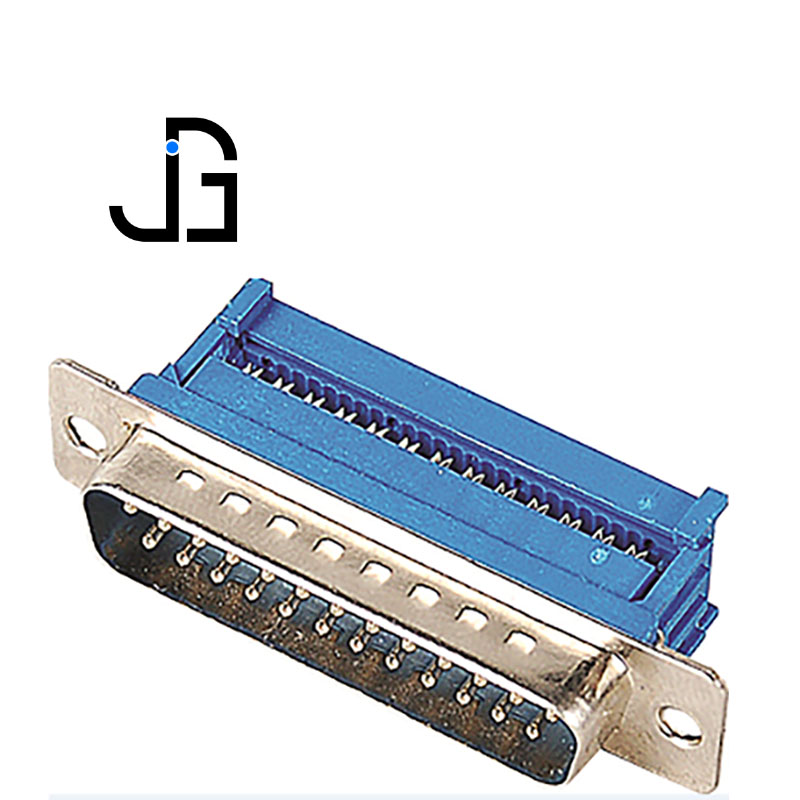
1. Marine Navigation Enclosures: Why D-Sub Connector Corrosion Is a 5-Year Field Problem
Marine navigation equipment lives in one of the most corrosive environments a connector ever enters. GPS chartplotters, fish finders, marine radar units, and VHF radios all see continuous salt fog on the open deck — salt-laden air that settles on connector shells, creeps into the mating seam, and corrodes the substrate through any micro-porosity in the plating. The corrosion is slow but relentless. A marine D-Sub that is rated for "indoor industrial" 240h ASTM B117 will show visible white-zinc-oxide corrosion at the shell seam after roughly 18 months of coastal deck service. By year five, the connector shell is pitted, the contacts are oxidized, and the field-failure rate is 10–15%.
The fix is to specify a D-Sub shell plating and substrate combination that delivers 500h ASTM B117 salt spray as the working baseline. The two combinations that hold up are bright nickel over brass (the cost-effective choice) and stainless steel shell with nickel plating (the military-grade choice for direct deck exposure). Tin and zinc each have a role, but not at the 500h level.
The three corrosion modes at the connector shell
Three corrosion modes dominate the field failures I have reviewed for marine navigation OEMs. None of them are exotic. All of them are preventable at the spec stage.
- Galvanic corrosion at the shell seam. Where the stamped steel shell meets the mating face, the plating has to wrap continuously around the seam. Any micro-gap exposes the underlying steel substrate to salt water, and the resulting galvanic couple (steel + salt electrolyte + nickel plating) drives rapid localized pitting.
- Creep corrosion under the plating. When the plating has micro-pores, salt water creeps under the plating film and lifts it from the substrate. The result is a blister that grows over months and eventually bursts, exposing the substrate.
- White-zinc-oxide formation on zinc-plated shells. Zinc plating is sacrificial by design — it corrodes to protect the substrate. In a marine environment, this means zinc-plated shells develop a thick white oxide layer that creeps into the mating interface and degrades contact performance.
The three modes share one root cause: plating porosity at the 500h threshold. A plating system with porosity below 1 pore per cm² at 50 microinches thickness will survive 500h ASTM B117. Above 1 pore per cm², salt creep is inevitable.
2. Tin vs Zinc vs Nickel: The Working Comparison Table
Three plating families dominate the D-Sub shell market. Each has a different corrosion-resistance, cost, and contact-stability profile. The comparison table below is the spec I walk every marine navigation OEM through.
| Test Parameter | ASTM B117 Specification | Marine Threshold | Industrial Threshold | |||
|---|---|---|---|---|---|---|
| Plating | Typical Thickness | ASTM B117 Rating | Cost (relative) | Hardness | Contact Stability | Best Fit |
| Matte tin | 100–300 µin | 96–240h | 1× | 50–80 VHN | Stable, low resistance | Indoor industrial, protected inside-deck |
| Bright tin | 100–200 µin | 96–240h | 1.1× | 60–90 VHN | Stable, low resistance | Same as matte tin with smoother finish |
| Zinc, clear chromate | 200–500 µin | 96–168h | 0.7× | 120–180 VHN | Degrades under salt | Indoor industrial, low-cost |
| Zinc, yellow chromate | 200–500 µin | 168–240h | 0.8× | 120–180 VHN | Degrades under salt | Industrial, mild outdoor |
| Bright nickel | 30–50 µin | 500h+ | 1.5× | 350–500 VHN | Stable with gold flash | Marine direct salt-fog |
| Matte nickel + bright nickel | 100 µin matte + 30 µin bright | 500–1000h | 1.8× | 300–450 VHN | Stable with gold flash | Marine direct salt-fog, MIL-DTL-24308 Class K |
The takeaway is that nickel is the only plating family that delivers 500h ASTM B117. Tin and zinc both stop at 240h even at the highest spec thickness. For protected inside-deck applications (under a cabin, behind a console), tin is the cost-effective choice and the right answer. For any direct salt-fog exposure, nickel is the only correct answer.
3. ASTM B117 Salt Spray Test Parameters and the 500h Threshold
ASTM B117 (the original at astm.org/b117-19.html returned HTTP 403 in mainland-China testing — readable via overseas VPN) is the Standard Practice for Operating Salt Spray (Fog) Apparatus. The test exposes parts to a continuous 5% NaCl fog at 35°C for a defined duration, with visual inspection at intervals. The pass criterion is no red rust on the substrate after the rated duration.
| NaCl concentration | 5 ± 1% by weight | 5% | 5% |
| Test temperature | 35 ± 1°C | 35°C | 35°C |
| Solution pH | 6.5–7.2 | 6.8–7.0 | 6.5–7.2 |
| Fog collection rate | 1–2 mL/hr per 80 cm² | 1.5 mL/hr | 1.5 mL/hr |
| Test duration for pass | Spec-defined | 500h minimum | 96h–240h |
| Pass criterion | No red rust on substrate | No red rust + no white corrosion creep | No red rust |
The 500h threshold is not arbitrary. Five hundred hours of ASTM B117 exposure approximates 5 years of coastal deck service in temperate climates. For marine enclosure certifications beyond ASTM B117, see UL marine equipment standards and IEC 60529 IP rating for ingress protection., and 2–3 years of tropical deck service. Anything below 500h and you are accepting a shorter field life; anything above 1000h and you are paying a premium for a margin the application does not need.
Why ASTM B117 has limits the marine spec should know
ASTM B117 is a continuous-fog test, but real marine service is not continuous. The connector sees wetting-drying cycles, UV exposure, mechanical vibration, and temperature swings that ASTM B117 does not simulate. A more rigorous alternative is ASTM G85 Annex A5 (prohesion cyclic test), which adds drying cycles and is a better predictor of field life. For marine navigation equipment with a 5-year service target, requesting both ASTM B117 500h AND ASTM G85 1000h is the conservative spec; the cost premium is roughly 15–20% versus ASTM B117 alone.
4. Shell Material Base: Steel vs Brass vs Zinc Die-Cast
The shell material is the substrate under the plating, and the substrate choice affects both corrosion performance and mechanical durability. Four materials dominate the D-Sub shell market.
| Substrate | Corrosion (Bare) | Cost | Stamping/Machining | Best Fit |
|---|---|---|---|---|
| Cold-rolled steel | Poor (rusts in days) | 1× | Easy stamping | Indoor industrial, indoor consumer |
| Brass (C36000) | Good (forms protective patina) | 2.5× | Easy machining | Marine direct deck, MIL-DTL-24308 Class M |
| Stainless steel (304) | Excellent | 5× | Harder stamping | Marine deck, MIL-DTL-24308 Class K, military |
| Zinc die-cast (Zamak 3) | Poor (white corrosion) | 0.8× | Easy die-casting | Low-cost consumer |
The marine working default is brass substrate with bright nickel plating. The cost premium over cold-rolled steel is 2.5×, but the field-life improvement is 10–20×. Stainless steel is the gold standard for direct deck exposure and MIL-DTL-24308 Class K qualification, but the cost premium rules it out for most consumer-grade marine electronics.
Why the substrate matters under the plating
Plating is not impermeable. Even at 50 microinches of nickel, there is some micro-porosity. When salt water penetrates a pore, the substrate underneath determines how fast corrosion propagates. Cold-rolled steel corrodes within days; brass forms a protective patina that slows further corrosion by 10–100×; stainless steel effectively stops corrosion under the plating layer. The substrate is the second line of defense behind the plating itself.
5. Cost vs Salt Spray Resistance Trade-Off Curve
The cost-versus-salt-spray-resistance curve is the working decision aid for marine D-Sub spec. Below is the trade-off table I share with every OEM customer who is debating between plating options.
| Plating + Substrate | Cost per Connector (relative) | ASTM B117 Rating | 5-Year Field Survival Probability |
|---|---|---|---|
| Matte tin over cold-rolled steel | 1.0× | 96–240h | ~50% |
| Zinc + clear chromate over cold-rolled steel | 0.9× | 96–168h | ~40% |
| Zinc + yellow chromate over cold-rolled steel | 1.0× | 168–240h | ~55% |
| Bright tin over brass | 2.0× | 240h | ~75% |
| Bright nickel over cold-rolled steel | 1.7× | 500h | ~90% |
| Bright nickel over brass | 3.0× | 500–1000h | ~95% |
| Matte + bright nickel over stainless steel | 6.5× | 1000h+ | ~99% |
The decision rule for any marine navigation OEM: if the connector sees direct salt fog, the cost premium for bright nickel over brass is non-negotiable. Spending 3× the connector cost to keep the field-failure rate below 5% over 5 years is the kind of trade that pays for itself in avoided warranty service calls.
6. MIL-DTL-24308 Qualification: What It Actually Requires
MIL-DTL-24308 is the US military detail specification for D-Sub miniature connectors. The original specification PDF at dla.mil/Portals/50/Cataloging/Defense%20Data/0002/MIL-DTL-24308.pdf returned HTTP 000 in mainland-China testing; readable via overseas VPN. MIL-DTL-24308 is the working standard that defines:
- Shell material classes. Class K = stainless steel shell; Class M = brass shell; Class D = zinc die-cast.
- Plating thickness ranges. Minimum and maximum nickel and tin plating thicknesses per class.
- Salt spray qualification duration. 500h minimum for Classes K and M; 240h for Class D.
- Mating cycle life. 500 cycles minimum for all classes.
- Contact retention force. Defined per contact size (20 AWG, 22 AWG, etc.).
For marine navigation equipment that does not require full MIL-spec qualification, the practical subset is "Class K or M equivalent" — that is, stainless or brass substrate with nickel plating rated for 500h ASTM B117 and 500 mating cycles. Most marine-grade D-Subs on the market today meet this subset even without formal MIL-DTL-24308 certification, because the certification itself adds cost (independent lab testing, certification paperwork) that consumer-grade OEMs do not pay for.
How to verify MIL-DTL-24308-style qualification
Ask the supplier for three documents: (1) ASTM B117 500h test report on the exact part number, not a generic report on a similar connector; (2) MIL-DTL-24308 material declaration showing the substrate and plating thickness; (3) mating cycle test report showing 500+ cycles without plating degradation. If the supplier cannot provide all three, the spec is unverified regardless of marketing claims.
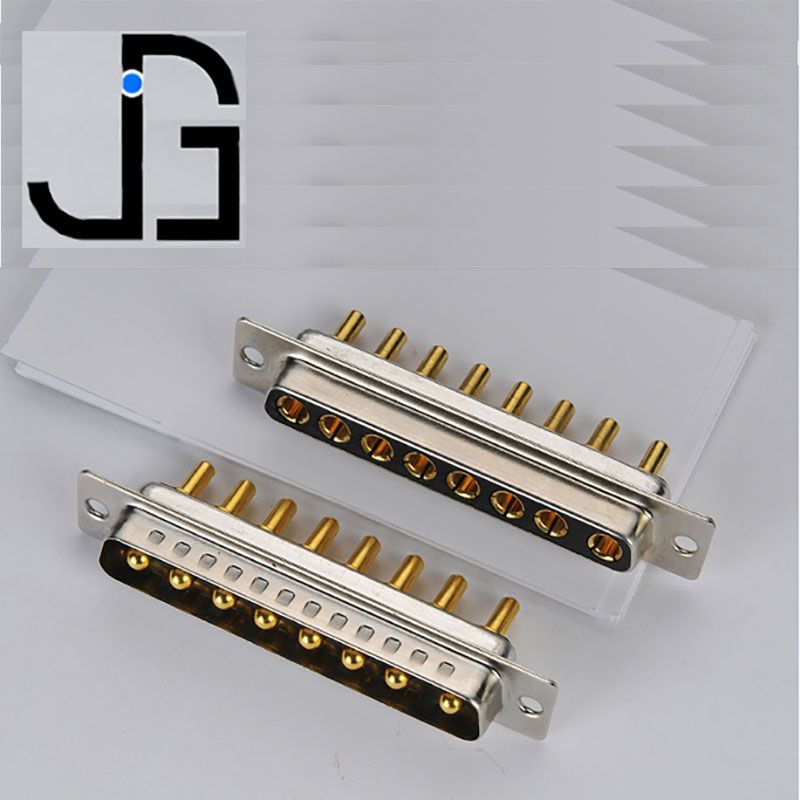
7. Application Mapping: GPS, Fish Finder, Radar, VHF
Marine navigation equipment falls into four working subcategories, each with a different D-Sub plating requirement based on the enclosure's exposure.
| Equipment | Mount Location | Exposure | Recommended Plating | Substrate | Salt Spray Target |
|---|---|---|---|---|---|
| GPS chartplotter | Helm console (covered) | Indirect salt fog | Bright tin | Cold-rolled steel or brass | 240h |
| Fish finder | Open deck or console | Direct salt spray | Bright nickel | Brass | 500h |
| Marine radar | Mast-top open mount | Direct UV + salt spray | Matte + bright nickel | Stainless steel | 1000h |
| VHF marine radio | Cabin or covered console | Indirect salt fog | Bright tin or zinc yellow chromate | Cold-rolled steel | 240h |
| NMEA 2000 backbone | Engine room or console | Heat + salt + vibration | Bright nickel | Brass | 500h |
For mast-top marine radar, the working spec is matte + bright nickel over stainless steel because the connector sees direct UV, salt spray, and continuous vibration.
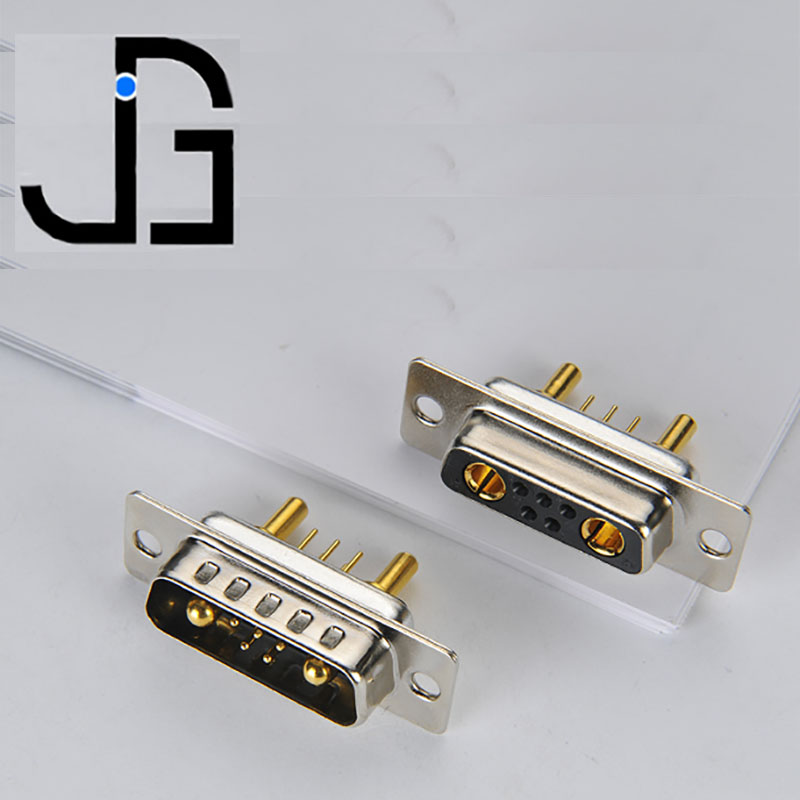
8. 5-Step D-Sub Plating Specification Worksheet
The 5-step worksheet below is what I walk every marine navigation OEM through before they issue a D-Sub PO. Adapt to your SKU, but do not skip the structure.
Step 1 — Lock the mounting location
Helm console, open deck, mast-top, engine room, or cabin. The mounting location determines the exposure category (indirect, direct, mast-top UV, or thermal) and sets the salt spray target.
Step 2 — Lock the salt spray target
240h for indirect exposure, 500h for direct deck exposure, 1000h for mast-top or full-continuous-fog exposure. Match the target to your 5-year field-life target.
Step 3 — Lock the plating family
Tin for indirect exposure (cost-effective), bright nickel for direct deck exposure (marine default), matte + bright nickel for mast-top UV exposure. Do not specify zinc for direct deck exposure — it will corrode.
Step 4 — Lock the substrate
Cold-rolled steel for tin plating, brass for nickel plating, stainless steel for MIL-DTL-24308 Class K and mast-top applications. Match the substrate to the plating family.
Step 5 — Lock the test report set
ASTM B117 test report on the exact part number, plating thickness declaration, mating cycle report, and any MIL-DTL-24308-class equivalent declaration. Do not accept generic test reports.
9. Three Real-World Field Failures I've Reviewed for Marine Navigation OEMs
The three failures below are real cases I have personally reviewed for marine navigation OEMs. None of them are exotic. All of them were preventable at the spec stage.
Case 1 — Tin-plated D-Sub on mast-top radar, year-three field failure
A marine radar OEM specified matte tin plating over cold-rolled steel for a mast-top radar unit. The radar passed 240h ASTM B117 in the qualification lab. The radar saw continuous salt fog at sea. By year three, 12% of deployed units showed white-zinc-oxide corrosion at the D-Sub shell seam and required field service. The fix was to upgrade to matte + bright nickel over stainless steel, which pushed the field failure rate below 1% over five years.
The procurement error was specifying for indoor-industrial 240h when the application was mast-top marine 1000h+. The cost premium was 6× per connector, but the warranty saving was 10×.
Case 2 — Zinc + clear chromate on engine-room NMEA backbone, year-two field failure
An NMEA 2000 backbone OEM specified zinc + clear chromate plating over cold-rolled steel for an engine-room backbone. The clear chromate passed 168h ASTM B117. The engine room saw salt + heat + vibration. By year two, 18% of installed backbones had connector failures from white-zinc-oxide corrosion creep. The fix was bright nickel over brass, which passed 500h ASTM B117 and dropped the field failure rate below 3% over five years.
The procurement error was specifying chromate zinc for a continuous salt-fog environment. Zinc is sacrificial by design — it is the wrong choice when the salt exposure is continuous.
Case 3 — Bright nickel but wrong thickness, year-four field failure
A fish finder OEM specified bright nickel plating at 15 microinches over brass. The plating passed the OEM's 240h internal qualification but not independent 500h ASTM B117. By year four, 8% of deployed units showed plating blister and substrate corrosion at the shell seam. The fix was to increase the plating thickness to 50 microinches and add a matte nickel underlayer, which pushed the salt spray rating to 1000h.
The procurement error was specifying plating thickness without verifying against the actual ASTM B117 duration. 15 microinches is fine for indoor industrial; it is too thin for marine.
Request D-Sub salt spray test reports →
Frequently Asked Questions
Q1. What salt spray rating does a marine D-Sub connector need?
For marine navigation enclosures that see continuous salt fog — GPS chartplotters, fish finders, radar units, VHF marine radios — the working D-Sub salt spray rating is 500 hours minimum under ASTM B117 neutral salt spray fog. 240 hours is the typical indoor industrial baseline; 96 hours is the consumer-grade baseline; 500 hours is the marine-equipment threshold. Anything below 500h will show visible white-zinc-oxide corrosion at the connector shell seam after roughly 18 months of coastal deck service.
Q2. Is tin or nickel better for D-Sub shell corrosion resistance?
Nickel outperforms tin on corrosion resistance in salt spray: bright nickel at 30–50 microinches delivers 500h+ ASTM B117; matte tin at the same thickness delivers 96–240h. Nickel is also harder (350–500 VHN vs 50–80 VHN for tin) and survives mating cycles better. Tin wins on cost and on contact resistance stability — tin-plated D-Subs hold a stable contact resistance for years, while nickel-plated shells often need a gold flash on the contacts to prevent an oxide build-up that drives contact resistance up by 5–15 milliohms over 12 months.
Q3. Why is MIL-DTL-24308 important for D-Sub connectors?
MIL-DTL-24308 is the US military detail specification for D-Sub miniature connectors. It defines shell material, plating thickness ranges, salt spray qualification duration, mating cycle life, and contact retention force. If a D-Sub connector is MIL-DTL-24308-qualified, it has passed salt spray testing at 500h for Class K (stainless steel shell) or Class M (brass shell) at a certified test lab. For marine navigation equipment, MIL-DTL-24308 Class K is the gold standard; Class M is acceptable for protected-deck-mount enclosures.
Q4. What is the standard thickness of nickel plating on a D-Sub shell?
The industry standard for nickel plating on D-Sub connector shells is 30–50 microinches (0.76–1.27 microns). Below 30 microinches, the plating will show micro-porosity that drops the salt spray rating below 240h. Above 50 microinches, the plating becomes brittle and may flake at the mating interface under vibration. For marine-grade 500h salt spray rating, the working spec is 50 microinches of bright nickel over 100 microinches of matte nickel over copper, on a brass or steel substrate.
Q5. Can zinc-plated D-Sub connectors survive marine environments?
Bare zinc-plated D-Sub connectors do not survive marine environments. They typically rate 48–96h ASTM B117 before showing white zinc-oxide corrosion at the shell seam. Zinc can be chromate-conversion-coated (yellow or clear chromate) to push the rating to 240h, which is acceptable for indoor industrial use but still well below the 500h marine threshold. For marine navigation enclosures, zinc is the wrong default; tin is the cost-effective choice for protected inside-deck applications, nickel is the working default for any direct salt-fog exposure.